Toronto MD ponders internet addiction
That's what The Globe and Mail today asked Dr Bruce Ballon (right), a youth addictions and gambling specialist from the , in Toronto.
His response? "It isn't a problem unless it's a problem."
Thankfully, he explains himself:
In my experience, problem behaviours centred on the Internet, gaming and online gambling often arise out of a failure to find a coping strategy for underlying mental-health issues.
These issues include Asperger's syndrome (the problem Internet behaviour would be trying to find out everything about a topic by constantly researching it); pathological gambling (getting stuck on the casino sites); social anxiety disorder (chats, role-play gaming worlds); obsessive-compulsive disorder (obsessed with something that keeps them tied to the Internet); substance use disorders (ordering and researching ways to use drugs), and sexual "addiction" (seeking and downloading pornography).
Tumultuous events in a teen's life - loneliness, being bullied or parental divorce - can also be at the root of a problem.
In short, technology is not the sole issue - it's really how Internet use and online habits interact with a person's unique makeup that determine whether there are the seeds of a problem.
But here's something that not everyone knows: Dr Ballon himself is a gaming enthusiast (albeit a more old-fashioned kind of game, without electronics). In 2004,
NRM profiled
Dr , "Unseen Masters."
In June, the American Medical Association , insisting more research is needed. (Read .)
Despite the decision not to include internet addiction in the ICD-10 or DSM-IV, there's advice available to , published in
Advances in Psychiatric Treatment earlier this year (subscription required).
Photo of Dr Ballon:
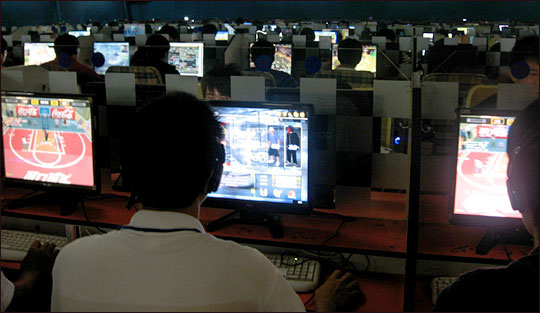
Photo of internet café:
Check out our website: